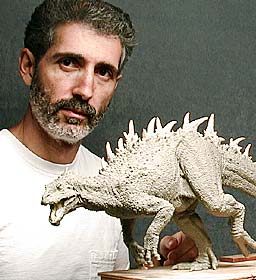
Tony McVey
é um escultor profissional e designer de personagens com mais de 35 anos de
experiência em modelagem para exibição de museus, longas-metragens e comerciais
de TV. Ele trabalhou em muitos filmes como Superman, O Cristal Negro, O
Regresso de Jedi, Gremlins, Howard, o Pato, Star Trek 3, Star Wars: A Ameaça
Fantasma, Ataque dos Clones e Beowulf.
SWCP: Como
se apaixonou pela magia cinematográfica e efeitos especiais?
T.M: Se bem
me lembro, eu tinha uns nove ou dez anos quando o meu pai me levou para ver um
filme chamado 7ª Viagem de Sinbad, que eu não sabia nada sobre e nem sabia quem
era o Sinbad, mas certamente chamou-me a atenção, preenchido com todas aquelas
criaturas míticas. O dragão, a pedra de duas cabeças e o esqueleto empunhando
espadas eram todos incríveis, mas foi o Ciclope que realmente capturou a minha
imaginação e desde que comecei a interessar-me em desenhar e pintar nessa idade
e a tentar capturar a sua aparência no papel.
Enfim, aos
treze anos vi o King Kong original de 1933 num cinema local e fiquei atordoado
de novo. Estava sendo exibido numa conta dupla com a versão em preto e branco
do The Thing from Another World e eu assisti ás duas exibições completas para
que pudesse assistir ao Kong novamente. Vi isso várias vezes desde então e
ainda o aprecio apesar das suas deficiências; a sua energia e ritmo é mais do
que compensar os enormes lapsos de lógica. Então, foi
depois de assistir várias ao King Kong,achei que a ideia de trabalhar em
efeitos especiais podia ser uma maneira interessante e agradável de ganhar a
vida, mas eu não tinha ideia de como fazê-lo.
SWCP: Você
passou vários anos como construtor de modelos para o Museu Britânico de
História Natural em Londres, antes de se mudar para a indústria
cinematográfica. Como foi essa experiência?
T.M:
Tinha-me formado recentemente num curso de tres anos estudando design gráfico
na escola de arte quando um amigo me mostrou um anúncio de jornal dizendo que o
Museu de História Natural estava a procurar um escultor para trabalhar na sua
unidade de Model Making and Taxidermy em Londres, então eu me inscrevi e
consegui uma entrevista que achei que correu razoavelmente bem, mas em última
análise, o trabalho foi para outra pessoa.
Cerca de um ano depois, o mesmo anúncio impresso apareceu, então eu
voltei a candidatar-me e desta vez fui bem sucedido acabando por ser
contratado, e trabalhei para o Museu com sede em Londres durante quatro anos.

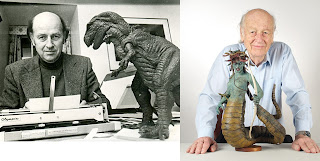
O Arthur
estava ciente do meu interesse em efeitos visuais e eventualmente mostrou-me
alguns dos seus scrapbooks, cheios de fotos das suas esculturas de argila da
Hydra (corpo e uma cabeça, já que Ray fez várias cópias de um molde) Talos
(outra versão foi usada, por um escultor diferente) e o pássaro Phorcorhacos da
Ilha Misteriosa.
Eventualmente,
Ray e Arthur reacenderam a sua amizade durante os seus anos de aposentadoria.
SWCP:
Conte-nos sobre o seu trabalho nos filmes de Star Wars.
T.M: No
final do quarto ano do meu tempo no Museu,Arthur disse-me que tinha ouvido de
um amigo que trabalhava na Pinewood Studios que o Les Bowie, um dos
supervisores do departamento de lá, havia manifestado interesse no meu trabalho. Mais tarde descobri que Les
tinha a reputação de trazer novas pessoas para o negócio, então se ele ouviu
falar de alguém com habilidades compatíveis ele tentaria encontrá-los e
fazê-los ser contratados se ele achasse que se encaixariam.
Tivemos uma
conversa por telefone e combinamos de nos encontrar para que o Les pudesse ver
fotos do meu trabalho e avaliar se eu seria uma adição útil ao filme em que
eles estavam a trabalhar que passou a ser Superman, dirigido por Richard Donner
e estrelado por Christopher Reeve. Durante um fim de semana, renunciei ao meu
trabalho no Museu de História Natural e comecei a trabalhar em Pinewood,
criando uma figura do Super-Homem voador á escala 1/6 que acabou sendo
mecanizada e suspensa por um pórtico aéreo e obrigada a "voar" entre
os arranha-céus de uma Metrópolis em miniatura. Durante o ano seguinte, também
fui contratado por várias empresas de produção de TV com sede em Londres,
criando modelos e personagens para vários comerciais de televisão.
Através de
uma dica de um colega dos meus dias de Museu, tive a sorte de conseguir uma
posição na produção de fantasia do Jim Henson, O Cristal Negro e acabei ficando
nele por cerca de um ano. Saí logo após as filmagens começarem na Ellstree
Studios e junto com um colega de trabalho, escultor e fabricante Michael
McCormick, vim para a Califórnia em busca de oportunidades de trabalho e
eventualmente encontrei-os no norte do Condado de Marin, na Industrial Light
and Magic, onde ambos fomos contratados para O Regresso de Jedi e,
consequentemente, nos envolvemos na criação de uma variedade de personagens
interessantes.


Trabalhei
em mais dois, Ameaça Fantasma e Ataque dos Clones. Para o primeiro,fiz modelos
conceituais do Watto, seguindo os designs que o diretor de arte Doug Chiang
tinha feito, JarJar Binks (embora a cabeça na minha versão inicial fosse
diferente do design final escolhido) e uma maquete de design para o Geonosiano,
algo que eu vim com base num esboço muito solto
que me forneceu para orientação. Quando finalmente vi o filme fiquei
bastante surpreso ao ver que meu projeto para o personagem tinha sobrevivido
praticamente inalterado.
Também fiz
pequenos modelos de duas criaturas marinhas, o Opee Sea Killer e o Colo Claw
Fish, ambos projetados pelo artista conceitual Terryl Whitlatch, cujo trabalho
eu admiro há muito tempo. Lançados em resina e pintados, eles forneceram
referência para o departamento de animação CG.
Se bem me
lembro, para Attack of the Clones a única coisa que esculpi foi uma cabeça Yoda
em tamanho real que servia como modelo básico para a versão CG.
SWCP: Você
foi trazido para o projeto Mandalorian pela Lucasfilm especificamente para
trabalhar no Baby Yoda.Em que se baseou para conceber este personagem?
T.M: Fui
contratado pelo Doug Chiang para trabalhar no Mandalorian no início de 2018.
Conheço o Doug há mais de trinta anos e ele sempre me contratou para contribuir
com as produções com as quais está envolvido. Esta produção tinha muitos
personagens alienígenas que exigiam ser realizados como uma escultura de
argila, seja como um busto ou figura completa ou ambos. Uma vez aprovado, eu
faria um molde de borracha de silicone, faria uma cópia de resina e, na maioria
das vezes, pintá-lo. Duas cópias seriam feitas, uma das quais ficaria no
Departamento de Arte e a outra seria enviada para Los Angeles para que pudesse
ser usada para referência por quem alguma vez deveria levá-la para a próxima
fase.
A
personagem do bebé Yoda foi projetada por um dos artistas conceituais do nosso
departamento, Christian Alzmann , e pediram-me para fazer um modelo alto de 15
cm para que todos os envolvidos pudessem perceber quais seriam as proporções,
detalhes da pele e coloração. Eventualmente tornou-se numa série de fantoches
individuais, alguns deles mecanizados para realizar uma variedade de movimentos
faciais e corporais.
Uma vez que
eu tinha terminado de trabalhar no bebé,recebi uma série de outros personagens
para desenvolver e foi só na exibição da primeira temporada que ficou evidente
que o personagem fez um grande sucesso com o público da TV em todos os lugares.
SWCP: Entre
tantas criaturas que criou, qual foi a que lhe deu mais trabalho a construir?
T.M: Sou
escultor profissional há 48 anos e, francamente, nem me lembro claramente da
maior parte dos projetos em que trabalhei, já faz muito tempo. No entanto,
quando eu e a pequena equipa designada para o projeto estávamos a trabalhar
durante as seis semanas ou mais no traje do Rancor,lembro-me claramente de me
perguntar se ele seria usado para o filme e como mencionado anteriormente, eu
não tinha muita esperança porque eu pensei que seria exatamente como era,uma
fantasia. Como se viu, eu estava certo. Felizmente, isso não acontece com muita
frequência e a maioria dos personagens que eu crio geralmente cumprem a sua
promessa.
SWCP: Em
que projetos está atualmente a trabalhar?
T.M:
Atualmente, estou numa pausa de Mandalorian e Book of Boba Fett mas desde que a
reação do espectador a esses shows tem sido tão boa eu prevejo que irei voltar
para a equipa do departamento de arte e me envolver em mais trabalho de
personagens.
SWCP: Que
mensagem gostaria de enviar a todos os que apreciam o seu trabalho e em
especial, aos fãs de Star Wars?
T.M: Gostaria de dizer o quanto o pessoal do
Departamento de Arte aprecia o feedback extremamente positivo que esses shows
receberam, tem sido muito encorajador para todos aqui ver uma reação tão forte
tanto dos fãs de Star Wars quanto do público em geral. Muito
obrigado.
ENGLISH VERSION:
Tony McVey, is a professional
sculptor and character designer with more than 35 years experience in model
making for museum display, feature films and TV commercials. He worked for many
films such as Superman, The Dark Crystal, Return of the Jedi, Gremlins, Howard
the Duck, Star Trek 3, Star Wars: The Phantom Menace, Attack of the Clones and
Beowulf.
SWCP: How did you fall in love with movie
magic and special effects?
T.M: As I recall, I was around 9 or 10 when my
father took me to see a movie called 7th Voyage of Sinbad, which I knew nothing
about and didn't even know who Sinbad was, but it certainly got my attention,
filled as it was with all those mythical creatures.
The dragon, two headed Roc and sword wielding
skeleton were all amazing but it was the Cyclops that truly captured my
imagination and since I was keen on drawing and painting at that age I started
trying to capture its appearance on paper, and failing.
Anyway, at age 13 I saw the original 1933 King
Kong at a local movie theater and was stunned all over again. It was showing on
a double bill with the black and white version of the Thing from Another World
and I sat through two complete showings so I could watch Kong again. I've seen
it multiple times since and still enjoy it despite its shortcomings; its energy
and pacing more than make up for the enormous lapses in logic.
So, it was after multiple watching’s of King
Kong that the idea of working in special effects might be an interesting and
enjoyable way to make a living, but I had no idea how to do it.
SWCP: You spent several years as a model maker
for the British Museum: Natural History in London, before moving into the film
industry. How it was this experience?
T.M: I had recently graduated from a 3 year
course studying graphic design at art school when a friend showed me a
newspaper ad saying that the Natural History Museum was looking for a sculptor
to work in their Model Making and Taxidermy unit in London, so I applied and
landed an interview which I thought went reasonably well, but ultimately the
job went to someone else.About a year
later the same print ad appeared so I reapplied and this time was successful
and got hired, and worked for the London based Museum for 4 years. I worked on
subjects ranging from fish, insects, extinct mammals and life size humans and
in the process learned about materials and improved my abilities.

SWCP: Tell us about your work on Star Wars
movies.
T.M: Towards the end of year 4 of my time at
the Museum Arthur told me he had heard from a friend working at Pinewood
Studios that Les Bowie, one of the department supervisors there, had expressed
an interest in looking at my work. I later found out that Les had a reputation
for bringing new people into the business, so if he heard of someone with
compatible abilities he'd try to meet with them and get them hired if he felt
they would fit in.
We had a phone conversation and arranged to
meet so Les could look at photos of my work and assess if I'd be a useful
addition to the movie they were working on which happened to be Superman,
directed by Richard Donner and starring Christopher Reeve in the title role.
Over the space of one weekend I resigned from my job at the Natural History
Museum and began work at Pinewood, crafting a 1/6 scale flying Superman figure
that was eventually mechanized and suspended from an overhead gantry and made
to "fly" between the skyscrapers of a miniature Metropolis.
During the following year I was also employed
by several London based TV production companies, creating models and characters
for various television commercials.
Through a tip from a colleague from my Museum
days I was fortunate to land a position on Jim Henson's fantasy production, The
Dark Crystal and ended up staying on it for about a year. I left shortly after
filming started at Ellstree Studios and along with a coworker, sculptor and
fabricator Michael McCormick, came to California looking for work opportunities
and eventually found them up north in Marin County at Industrial Light and
Magic where we both got hired on Return of the Jedi and consequently became
involved in the creation of a variety of interesting characters.


I worked
on 2 more, Phantom Menace and Attack of the Clones. For PM I made concept
models of Watto, following the designs that Art Director Doug Chiang had done,
JarJar Binks (although the head on my early version was different from the
final design chosen) and a design maquette for the Geonosian, something I came
up with based on a very loose sketch provided to me for guidance. When I
finally saw the movie I was quite surprised to see my design for the character
had survived practically unchanged.
I also made small models of two sea creatures,
the Opee Sea Killer and Colo Claw Fish, both designed by concept artist Terryl
Whitlatch, whose work I've long admired. Cast in resin and painted, they
provided reference for the CG animation department.
As I recall, for Attack of the Clones the only
thing I sculpted was a life size Yoda head which served as the basic model for
the CG version.
SWCP: You were brought on for the Mandalorian
project by Lucasfilm specifically to work on Baby Yoda. What were you
resigning for to conceive this character?
T.M: I was hired by Doug Chiang to work on
Mandalorian in early 2018. I've known Doug for over 30 years now and he's often
hired me to contribute to the productions he's involved with. This production
had lots of alien characters that required being realized as a clay sculpt,
either as a bust or full figure or both. Once approved, I would make a silicone
rubber mold, make a resin copy and more often than not, paint it. Two copies
would be made, one of which would stay in the Art Department and the other
would be sent to Los Angeles so it could be used for reference by whom ever was
to take it to the next phase.
The baby Yoda character was designed by one of
the concept artists in our department, Christian Alzmann , and I was asked to
make a 6" high model of it so everyone involved with realizing it could
see what the proportions, skin details and coloration would be. It eventually
became a series of individual hand puppets, some of them mechanized to perform
a variety of facial and body movements.
Once I'd finished working on the baby I was
given a series of other characters to develop and it wasn't until the airing of
Season 1 that it became apparent the character was a huge hit with TV audiences
everywhere.
SWCP: Among all the creatures you've created,
which one has given you the most work to build?
T.M: I've been a professional sculptor for 48
years now and frankly I don't even remember clearly the bulk of the projects
I've worked on anymore, it's just been too long now. However, when I and the
small crew assigned to the project were working for the 6 weeks or so on the
Rancor costume for Jedi I distinctly recall wondering if it would ever get used
for the movie and as mentioned earlier, I didn't have much hope for it because
I thought it would look exactly like what it was, a costume. As it turned out,
I was correct.
Thankfully, that doesn't happen too often and
the majority of characters I create usually fulfill their promise.
SWCP: What projects are you currently working
on?
T.M: Presently, I'm on a break from
Mandalorian and Book of Boba Fett but since the viewer reaction to these shows
has been so good I anticipate I'll rejoin the art department crew and get
involved in more character work before too long.
SWCP: What message would you like to send to
everyone who appreciates your work and especially star wars fans?
T.M: I'd like to say how much the Art
Department personnel appreciate the enormously positive feedback these shows
have received, it's been very encouraging for everyone here to see such a
strong reaction from both the SW fans and the general public.
Thanks so much.